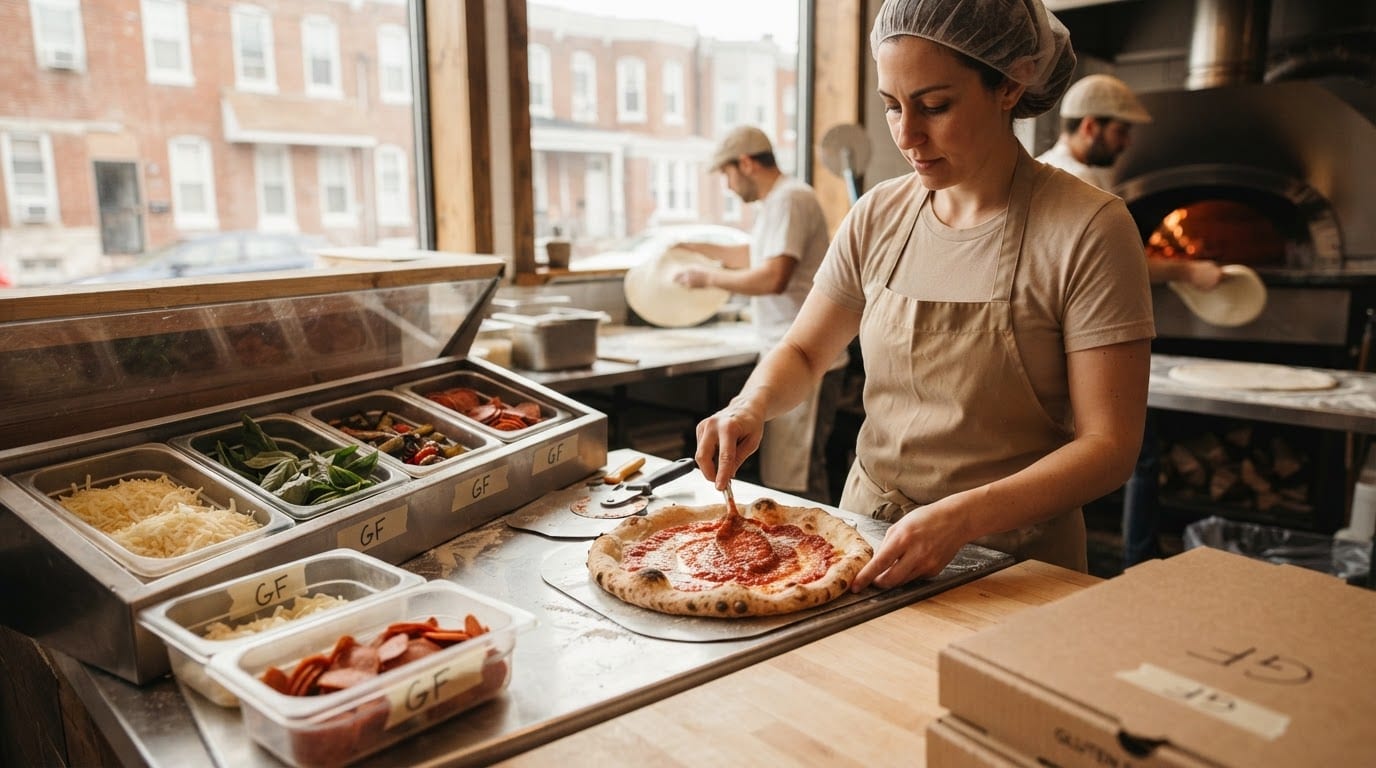
Few foods carry as much local identity as pizza in Philadelphia. From corner shops in South Philly to sit-down spots along Main Street in Manayunk, the city’s pies are a daily habit for many residents. For someone who eats gluten-free, that habit can be complicated. A menu may list a gluten-free crust, yet the answer to whether it is safe depends on how the dough is handled, where it is baked, and what goes on top.
Searches for gluten free pizza philadelphia tend to return long lists of places, but a listing rarely explains how a kitchen actually prepares its food. This guide explains how to evaluate crust options, which questions to ask before ordering, how to read menus and reviews for meaningful signals, and how to keep a gluten-free pie tasting good after it leaves the restaurant. The goal is not to name a single winner. It is to give readers a method they can apply in any neighborhood.
Choosing well starts with knowing what to ask. Restaurants such as The Tomato Shack salad & pizza co, Manayunk can be evaluated the same way as any other pizzeria: by checking how the gluten-free crust is made, what equipment touches it, and whether staff can describe the process in plain terms. Readers should confirm current practices directly before ordering, since preparation methods and menus change over time.
Why Philly’s Pizza Scene Makes Gluten-Free Ordering Tricky
Most Philadelphia pizzerias handle wheat flour all day. Flour is dusted onto bench tops, peels, and dough balls, and it drifts through the air during open dough-tossing. Even a restaurant that offers a gluten-free crust may be working in a space where airborne flour settles on prep surfaces, utensils, and cutting boards. This is the basis of cross-contact, the unintended transfer of gluten from one food to another.
Shared ovens create a second problem. Many shops bake gluten-free pies on the same deck or in the same conveyor oven as regular pies. Crumbs and flour residue can fall onto the deck, and cheese that bubbles over a regular pizza can drip onto a gluten-free crust placed nearby. Busy dinner rushes make these risks more likely because staff are under time pressure and may not change gloves or wipe screens between orders.
The stakes differ depending on why someone avoids gluten. For people with celiac disease, an autoimmune condition in which gluten triggers damage to the small intestine, even small exposures can cause symptoms and long-term harm. For people who simply prefer to limit gluten, cross-contact is a matter of comfort and personal choice rather than medical risk. This guide addresses both groups, but readers with celiac disease should treat the questions in the checklist below as essential, not optional.
Crust Styles You’ll Actually Encounter
A "gluten-free" pizza is not one product. The crust style determines texture, how the pizza cooks, and how well it supports toppings, so it matters as much as the label.
Thin-crust gluten-free bases, often made from a blend of rice flour, tapioca starch, potato starch, and xanthan gum, are the most common in Philadelphia. They are crisp at the edge and brittle in the center, with little chew. They cook quickly and tend to hold light toppings well, but heavy sauce or wet vegetables can make the center soggy.
Neapolitan-style gluten-free crusts are harder to produce because wheat gluten normally gives them their stretch and blistered char. Gluten-free versions rely on hydrocolloids and starches to mimic that structure. When they work, they offer a soft, airy rim and a pliable center. When they do not, they crack when stretched and tear under the weight of toppings.
Cauliflower and almond-flour bases represent a different category. Cauliflower crusts are typically dense and moist, with a flavor that can be distinctly vegetal. They often need pre-baking to firm up before toppings are added. Almond-flour crusts are richer and slightly sweet, with a crumbly bite that can taste more like a cracker than traditional dough.
Dedicated Gluten-Free Crusts vs. Made-to-Order Substitutes
The most important distinction is between crusts prepared in a separate area with fresh supplies and pre-made crusts baked in shared equipment. Some kitchens buy frozen gluten-free crusts, which typically cost the restaurant several dollars per unit, and then top and bake them alongside regular pies. Others make dough in a designated station, using dedicated scales, bowls, and bench surfaces, then bake on a separate pan or screen. The second approach reduces risk substantially, but it is also more labor-intensive, and not every shop has the space or staffing to do it.
Pricing offers a rough guide to what is involved. In the Philadelphia area, a gluten-free crust upcharge commonly ranges from about $2 to $5 for a standard pie, while specialty cauliflower or almond-flour options may run higher. A higher price does not guarantee separate preparation, so the question should always be asked directly.
Vegetable and Nut-Flour Bases
Vegetable and nut-flour crusts are useful for readers who want to avoid grain-based starches entirely, but they cook differently from wheat-style dough. Cauliflower crusts release moisture as they bake, so they benefit from a par-bake of roughly 8 to 10 minutes at 425°F before toppings go on. Almond-flour crusts brown faster because of their fat and sugar content, and they can scorch at temperatures that work well for thin crusts.
Toppings should be chosen with the base in mind. Thin and Neapolitan crusts pair well with fresh mozzarella, basil, and moderate tomato sauce. Cauliflower crusts hold up better to roasted vegetables, sausage, and sharp cheeses that add flavor without excess moisture. Almond-flour crusts complement goat cheese, figs, and prosciutto, which balance their nutty sweetness.
Questions to Ask Before You Order
Restaurant staff can answer most safety questions if they are asked specifically. Use this checklist when calling or ordering online:
- Is the gluten-free crust prepared in a separate area from regular dough?
- Are gloves changed before handling gluten-free crusts or toppings?
- Does the kitchen use a dedicated pan, screen, or pizza peel for gluten-free pies?
- Are gluten-free crusts baked in a separate oven or on a separate deck in a shared oven?
- Are the crusts pre-made by a supplier, or made in-house?
- Are sauces, seasoned meats, and sprinkled toppings gluten-free?
Ingredients outside the crust can introduce gluten even when the base is safe. Pizza sauces may contain wheat-based thickeners or malt flavoring. Sausage and meatballs are often seasoned with breadcrumbs or fillers. Grated Parmesan and shredded cheese blends sometimes include anti-caking agents derived from wheat. Pre-shredded cheeses and seasoned croutons used as garnish are common hidden sources. Ask whether each topping is prepared gluten-free, not just the crust.
Phrasing matters. Rather than asking whether a pizza is "gluten-free," which can receive a simple yes regardless of preparation, ask: "I have celiac disease. Can you tell me how the gluten-free crust is prepared and baked, and whether it is kept separate from regular pizza?" For online orders, use the special-instructions field to state the requirement and, if possible, call to confirm before pickup. Many restaurants will not guarantee zero cross-contact, and that answer is itself useful information.
Finally, the Food and Drug Administration defines a "gluten-free" food as one containing fewer than 20 parts per million of gluten under 21 CFR 101.91. Third-party certification programs such as the Gluten-Free Certification Organization use a stricter 10 ppm threshold and audit facilities. Certification is uncommon in independent pizzerias but is worth noting when present.
Reading Menus and Reviews for Reliable Signals
Menus and reviews are useful, but only when read carefully. A menu that says "gluten-free crust available" tells the reader very little. Stronger menu signals include a specific description of how the crust is made, a note that items are prepared in a shared kitchen, or allergen information that identifies which ingredients contain wheat.
Reviews require a similar filter. Vague praise such as "great pizza" or "delicious gluten-free option" says nothing about preparation. More useful reviews mention specific details: a reviewer who reports that staff changed gloves, explained the separate prep station, or described the dedicated pan is providing evidence. Consistent comments from different reviewers over time carry more weight than a single detailed review.
Reviews from people who mention celiac disease, or who describe symptoms after eating, should be read with care. Individual reactions vary, and a single negative report does not establish a pattern, but a cluster of such reports suggests the kitchen’s practices deserve closer questioning before ordering.
Check the dates on reviews. Kitchen staff change, suppliers switch, and menus are revised frequently. A glowing review from several years ago may describe a process that no longer exists. Prioritize reviews from the past several months and confirm current practices by phone.
Takeout, Reheating, and Keeping Quality High
Gluten-free pizza is more fragile in transit than regular pizza. Its thinner, starch-based crust absorbs steam from the box, which softens the edge and can make the center gummy. To limit this, open the box slightly after pickup or transfer the pizza to a wire rack placed over a sheet pan. Venting allows moisture to escape and helps the crust keep some of its crispness on the drive home.
Reheating is where most of the quality is recovered. The oven is the most reliable method. Preheat to 400–425°F, place the slice directly on the rack or a preheated pan, and heat thin crusts for 4 to 6 minutes. Thicker or cauliflower-based crusts need 8 to 10 minutes. A toaster oven at 375°F works for single slices, typically taking 5 to 7 minutes. A covered nonstick skillet over medium-low heat is effective for thin crusts: cover for 2 to 3 minutes to melt cheese and warm the center, then uncover for another minute to crisp the bottom. Microwaves should be avoided, as they produce a rubbery texture.
Storage requires attention to both quality and safety. Refrigerate leftovers within two hours of delivery, and consume them within three to four days. Store gluten-free slices in a sealed container, separate from regular pizza, and label them clearly. Place parchment between slices to prevent sticking. For readers with celiac disease, keeping gluten-free food physically separate in the refrigerator, and using clean utensils and cutting boards when reheating, reduces the risk of cross-contact at home as well as in the restaurant.
