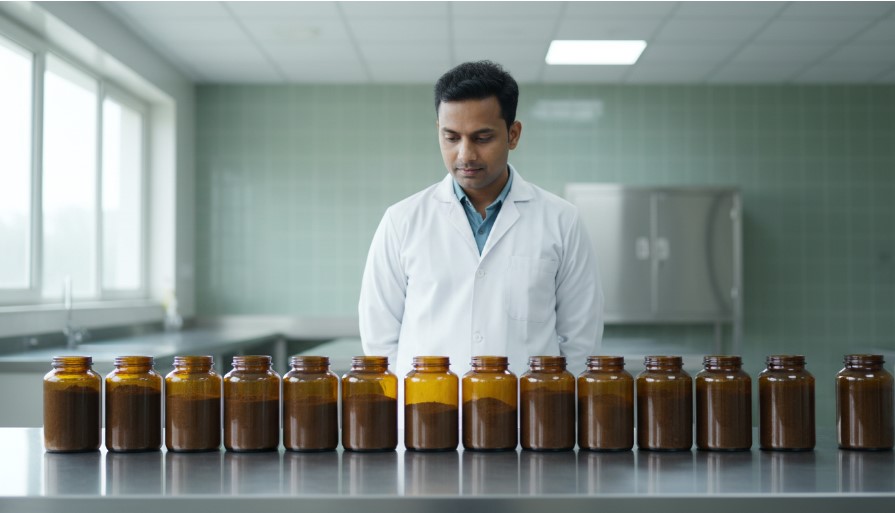
Turn an approved pilot batch into clear questions for a supplier before it becomes a recurring purchase order. The task is to find out whether the next lot can match the material your formulation team approved.
You’re weighing a quote after a formulation trial has passed, and purchasing needs more than one promising result. A kutki extract trial can begin as a small order to check formulation fit, but it should also establish what must stay consistent before repeat supply begins.
Locking the Spec
Once the pilot passes, both sides need to write down what approval meant. A locked specification records the agreed identity, active marker or other agreed measure, acceptance limits, extract form and handling requirements that may affect performance in your formulation.
Ask the supplier to document:
- the identity test and agreed result range
- the limits used before a lot is released
- the response when a lot falls outside specification
That document gives production and purchasing the same reference point. Without it, a repeat order can become a request for something that merely resembles the original sample.
Why One Good Batch Isn’t Proof
A pilot batch shows that one lot worked in one formulation. Plant-derived material can differ with season and origin, so matching colour, appearance or odour does not establish that a later lot will behave the same way in your process.
Treat sample approval as the point where repeat controls begin. Ask what the supplier will compare on every later lot, how those results relate to the approved material, and when a result requires discussion before release.
Reference Materials
Retesting gives the specification practical force. The Indian Pharmacopoeia Commission lists pharmacopoeial reference standards for herbal and phyto materials, showing that standardised comparison materials exist within India’s quality-testing environment.
These materials give laboratories a defined comparator when confirming identity or checking consistency. Ask which comparison method supports the supplier’s testing and whether that method will remain in place after the pilot stage.
Testing Context
Testing is part of the wider research environment. India’s national nutrition research institute operates under the Indian Council of Medical Research and is part of the country’s institutional nutrition research base.
For a formulation team sourcing botanicals, standardisation needs to be a production discussion rather than a label claim. The supplier should be able to explain, in plain terms, what gets checked between lots and how those checks relate to the agreed specification.
Starting Small on Purpose
A small order lets your team test formulation fit before committing to repeat supply. It also provides an approved material for later comparison, provided both sides record the basis on which the sample passed.
A kutki extract sample should lead to a discussion about the future specification, rather than a decision to reorder the same item without further detail. Keep formulation observations separate from release criteria, because they answer different questions when the next lot arrives.
Recurring Supply Terms
Once the specification is agreed and repeat testing supports it, purchasing can move towards a standing arrangement. An asparagus root extract order should include agreed retest points instead of relying on the original sample approval.
For asparagus root extract, ask when lot documents will be shared, what triggers a review, and how the parties will handle a result outside the agreed range. Set those terms before the material reaches your production floor.
In Closing
The first passed batch matters, but it is only the starting reference for repeat supply. The decision to move beyond a pilot should rest on a written specification, a clear approach to identity and consistency checks, and an agreed response when later material does not match the approved standard.
Bring the pilot record into the quote discussion and ask the supplier to show how each repeat lot will be checked against it. Could everyone involved in purchasing and production read those terms at a glance today?
