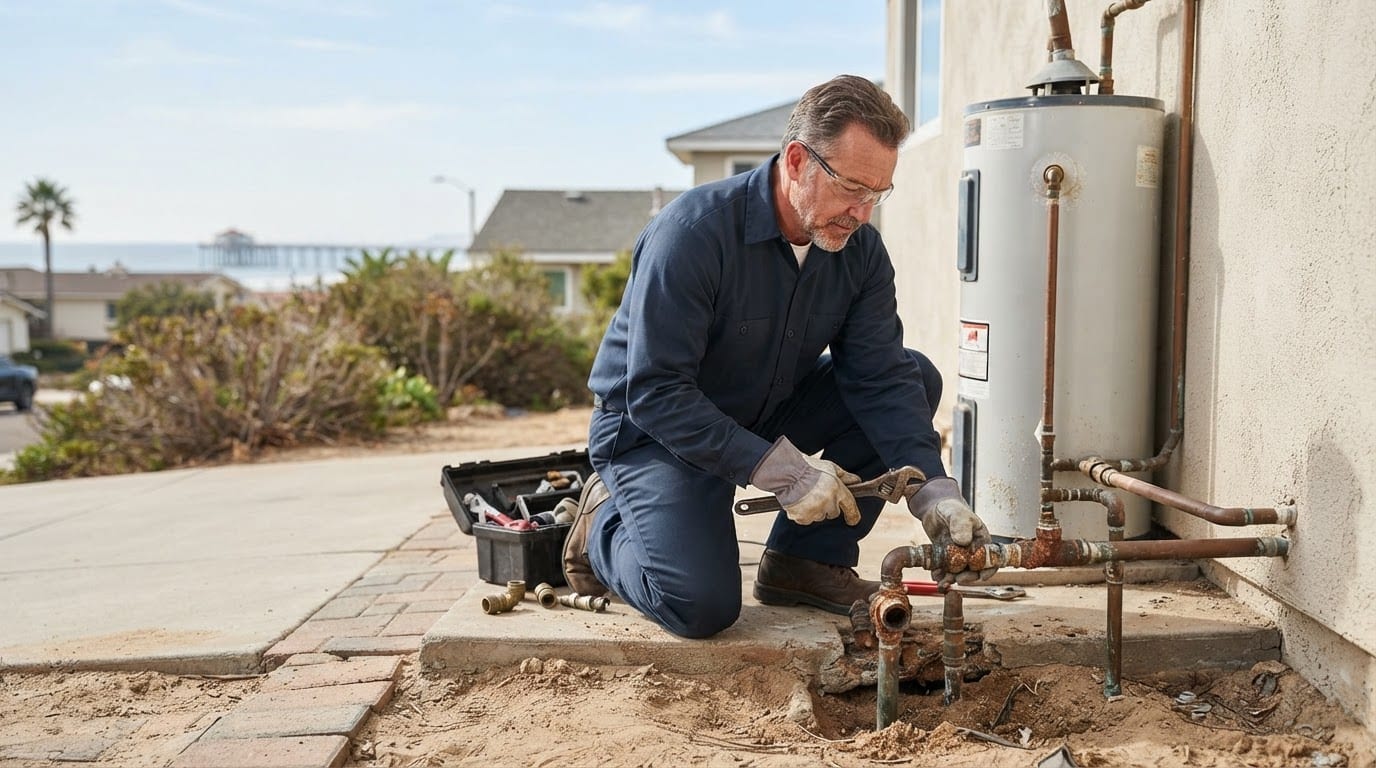
Plumbing rarely fails all at once. In coastal neighborhoods, small problems such as a faint green stain on a hose bib, a drain that empties slowly, or a water heater that runs louder than it used to often appear long before a leak becomes visible. Knowing which symptoms matter, and which materials and conditions drive them, helps homeowners decide when a simple repair is enough and when a larger conversation is needed.
Homeowners searching for a Huntington Beach plumber are usually dealing with one of three situations: an urgent leak, a recurring repair, or a planned upgrade. Each calls for a different response. An urgent leak needs fast shutoff and containment, while a recurring repair or planned upgrade benefits from a written scope, a camera or pressure test where appropriate, and a comparison of options before any work begins. Understanding the local context first makes those conversations more productive.
Whether the work is a routine service call or a larger project, a few habits protect homeowners. Photograph the water heater connections, shutoff valves, and exterior hose bibs once a year so changes are easy to spot. Keep receipts and permit records together. And when a contractor such as Plumbing By Tony recommends a repair, ask what caused the failure, not only what needs to be replaced. The answer often determines whether the problem will return.
Why Salt Air and Sandy Soil Shape Local Plumbing Wear
Inland homes face temperature swings and hard water, but Huntington Beach homes also contend with marine air and sandy, shifting ground. The combination accelerates corrosion above grade and stresses piping below it.
Corrosion on Exposed Fixtures and Connections
Salt-laden air settles on metal surfaces and accelerates galvanic and general corrosion, especially where dissimilar metals meet. Exposed components typically show wear first:
- Brass and chrome-plated shutoff valves with pitting, white or green crust at the packing nut, or a stem that is difficult to turn
- Braided stainless or vinyl supply lines with discolored sheathing, rust bloom at crimp fittings, or bulging near the connection
- Outdoor hose bibs and wall penetrations with staining, weeping at the handle, or a loose vacuum breaker
- Water heater components, including the T&P relief valve, gas control connections, and the anode rod area, where corrosion can be hidden behind insulation or cabinetry
During routine inspections, check for drips at valve stems, mineral crust on threads, and any metal that flakes when touched. A failing angle stop can look fine until it is operated, so test shutoffs by turning them gently a few times once a year. Stiff or seized valves should be serviced or replaced before an emergency requires shutting them off.
Soil Movement and Underground Pipe Stress
Sandy and loosely compacted soils drain well but move under changing moisture levels and load. Over time, that movement can shift trenches, settle fill around buried lines, and strain joints where pipes pass through slab foundations. Coastal lots with irrigation, seasonal rain, and fluctuating groundwater can see these effects more quickly.
The early warning signs are often subtle: a drain that slows over several weeks, a faint sound of running water in a wall without a visible leak, or a water meter that keeps moving when fixtures are closed. Shifting soil rarely causes a sudden rupture first. It more commonly produces a slow sag in a sewer line, which then traps solids and causes recurring clogs. Treating these symptoms as indicators of ground movement, rather than isolated clogs, leads to better diagnosis.
Older Homes and the Materials Behind Recurring Repairs
In older Huntington Beach neighborhoods, the material in the wall or under the slab often explains the repair history more than daily use does. Each common material has a predictable failure pattern.
- Galvanized steel supply lines corrode from the inside, restricting flow and reducing pressure. Repeated fixes at the fixture rarely solve the problem because the restriction is upstream.
- Cast iron drain and waste lines can develop scale buildup, cracks, and joint failures. Root intrusion and offset joints commonly appear in older sewer laterals.
- Orangeburg (bituminous fiber) sewer pipe, used in many mid-twentieth-century installations, softens and deforms over time. Camera inspection often reveals sags and bellies that cause repeated backups.
- Copper is durable, but aggressive water chemistry can cause pinhole leaks, particularly in older runs with heavy scale.
- Polybutylene (PB) supply lines are prone to brittle failure at fittings and are generally recommended for replacement in homes where they are present.
- PVC, ABS, PEX, and CPVC are more common in later installations, though joint quality and UV exposure in exposed runs still matter.
A spot repair makes sense when the failure is isolated, the surrounding pipe is sound, and the material is still serviceable. Repeated leaks in the same system, multiple failures across fixtures, or a material known to be near the end of its service life point toward a larger replacement conversation. Replacing a section of a sewer lateral with trenchless lining may cost several thousand dollars, while a full repipe of a single-story home can range considerably higher depending on access and finishes. Ask for a written comparison of both options so the decision rests on the pipe’s condition rather than on the next emergency call.
Sewer Lines and Drain Symptoms Worth Acting On Early
A single clogged sink is usually a fixture problem. Symptoms that involve multiple drains point to a building drain or sewer lateral.
Pay attention when:
- Two or more fixtures back up at the same time, especially a shower and a toilet
- Gurgling occurs in a lower fixture when an upper fixture drains
- Water rises in a floor drain or a shower after the washing machine runs
- Foul odors persist between clogs or appear near cleanouts
- Lawn areas over the sewer line stay unusually soft or wet
Diagnosis typically starts with a visual inspection of accessible cleanouts, followed by a sewer camera inspection. Camera inspection commonly runs from roughly $150 to $500, depending on access and whether a locator is used. Pipe locating with a transmitter and receiver marks the line’s depth and path, which matters before any excavation. Hydro-jetting clears grease and debris, but it does not correct sags or cracks, so the camera footage should guide the repair choice.
Early attention usually costs less. A line that is cleared and inspected when the first symptoms appear avoids the expense of water damage to flooring, drywall, and subfloor, along with sanitation cleanup and emergency service rates. Those secondary costs often exceed the price of the original repair.
Water Heaters, Water Quality, and Upgrade Timing
Water heater performance depends on tank age, sediment buildup, and water chemistry. Sediment insulates the burner or heating element, forcing longer run times and increasing gas use. Flushing once or twice a year can slow that process in tank units, though the benefit depends on the water supply and the manufacturer’s instructions.
Repair or replacement decisions should consider several factors:
- Age: Standard atmospheric-vent gas tanks often last roughly 8 to 12 years, depending on water quality and maintenance.
- Venting: Replacing a unit with a different efficiency class may require a new venting configuration, including power venting or direct venting.
- Gas connections: Flexible gas connectors, shutoff access, and drip legs should meet current code.
- Capacity: A household’s peak demand, not just its tank size, determines whether the new unit will perform adequately.
- Seismic protection: California requires water heaters to be secured against movement, a relevant consideration in a seismically active region.
- Air quality rules: Gas water heaters installed in the South Coast Air Quality Management District, which includes Orange County, may be subject to emissions standards that affect model selection.
Typical installed costs for a conventional gas tank replacement often fall in the range of about $1,500 to $3,500, while tankless systems commonly start higher, frequently between $3,000 and $6,000, once venting, gas line upgrades, and electrical work are included. Tankless units can reduce standby losses and suit homes with variable hot-water demand, but they require adequate gas capacity, periodic descaling in hard-water areas, and a clear understanding of flow rates. A higher-efficiency tank or a heat-pump model may suit other households better. No single system is universally the right choice; the correct answer depends on the home’s layout, usage, gas supply, and budget.
Permits, Licensing, and Verifying a Plumber Before Work Starts
Plumbing work generally requires a permit when it involves new installations, relocations, sewer or drain replacement, water heater replacement, or gas line modifications. The City of Huntington Beach Building and Safety Division administers permits under the California Plumbing Code, which is based on the Uniform Plumbing Code. Permits matter because they create an inspection record. During a home sale, buyers and lenders may ask for documentation of major work, and insurers may request proof of permitted repairs when evaluating a claim.
Before work begins, verify the contractor:
- Confirm the license with the California Contractors State License Board (CSLB). Plumbing work falls under the C-36 classification.
- Request certificates of general liability insurance and workers’ compensation coverage, and confirm they are current.
- Ask whether the contractor carries a contractor’s bond as required under California law.
- Obtain a written estimate that describes the scope, materials, fixture or pipe brands and grades, permit responsibility, and the cleanup and restoration included.
Several questions clarify the working relationship. Ask what the warranty covers for labor and parts, and how long it lasts. Ask whether the company offers after-hours emergency service and what the rates are. Ask how the work will be documented, including photos before and after, camera footage of sewer repairs, pressure test results, permit numbers, and final inspection sign-off. Clear answers on these points protect the homeowner long after the crew leaves.
