Supplement brands stand out by adding traditional botanicals that rival ranges overlook. Shatavari root and piperine fit neatly beside ashwagandha when formulation goals and supplier specifications are settled early, ideally with one manufacturer testing every lot in its own lab.
Walk down any supplement aisle and the same handful of herbs repeats on label after label, which makes a new range easy to miss. Brands hunting for a different angle are turning to traditional herbal systems for fresher ingredients. A standardised asparagus root extract gives a product team a recognised Ayurvedic botanical with clear saponin specifications to build around.
What Traditional Herbal Systems Offer a Crowded Supplement Shelf
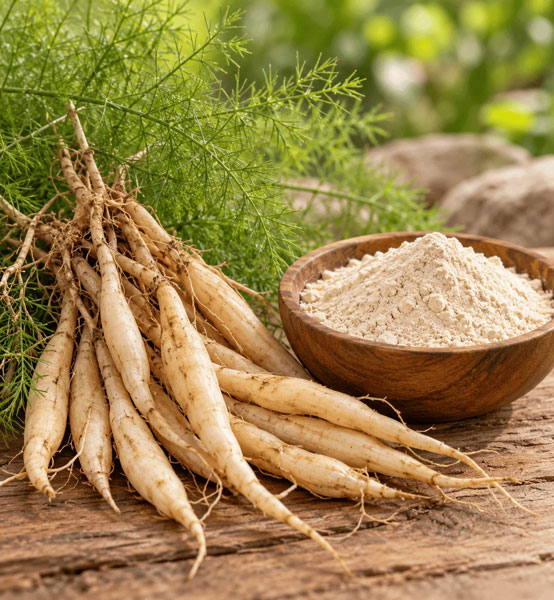
Shatavari as a Point of Difference: Shatavari is the Ayurvedic name for Asparagus racemosus, a climbing plant whose roots hold saponins called shatavarins. A well-documented asparagus root extract comes in saponin grades from 20% up to 50%, with species identity confirmed at intake. Garden asparagus belongs to the same genus, and a mix-up at that stage would put a label claim at risk.
A Pepper Alkaloid with Wide Reach: Piperine, the pungent alkaloid in black pepper fruit, turns up in far more formulas than its tiny dose suggests. A piperine extract at 95% purity by HPLC suits curcumin blends and sports nutrition lines, and a 98% grade is made against confirmed orders. Researchers have studied piperine for its effect on how the body absorbs curcumin.
Where Shatavari and Ashwagandha Share a Formula
Classic Pairings, Modern Capsules: Classical texts of Ayurvedic medicine have long paired shatavari with ashwagandha in rasayana formulas, a class of rejuvenating preparations. A modern brand can carry that pairing into an adaptogen capsule or a powder sachet. Every claim printed on the pack still has to fit the rules of the market where it sells, which differ sharply between India and Europe.
One Catalogue, Several Product Lines: A manufacturer listing around fifty plant extracts, from bacopa to holy basil, lets a brand add a second or third launch without a fresh supplier audit. Buyers ordering asparagus root extract can add amla or ashwagandha to the same consignment, and each lot passes through the same in-house laboratory before dispatch.
Formulation Goals That Shape Every Botanical Choice
Start from the Product Profile: Product teams that pick herbs before defining the finished product usually end up reformulating after the first stability test, losing months of work. A written target product profile sets the dose format and the claim wording before anyone requests a sample. From there, you can compare each candidate botanical against a few practical checks:
- The saponin or piperine percentage your label claim relies on
- Whether the powder blends evenly at your capsule fill weight
- Light protection during storage, which piperine needs
- Mesh size that suits tablets as well as granules
Specifications to Request in Writing: Each lot of piperine extract leaves the plant with its HPLC assay and heavy metal results on record, sealed in light-protected food-grade liners. Ask for those reports and the shelf-life data before the pilot batch. A missing test can hold a container at the port for weeks while your launch date slips.
The Next Product Range Grows from a Wider Botanical Catalogue
Brands that keep several botanicals under one supplier spend far less time chasing paperwork between vendors. That leaves room for the creative work of shaping a range customers remember. Share your shortlist and the percentages you need with the extraction team, and ask for pilot samples to trial in your own blends.
