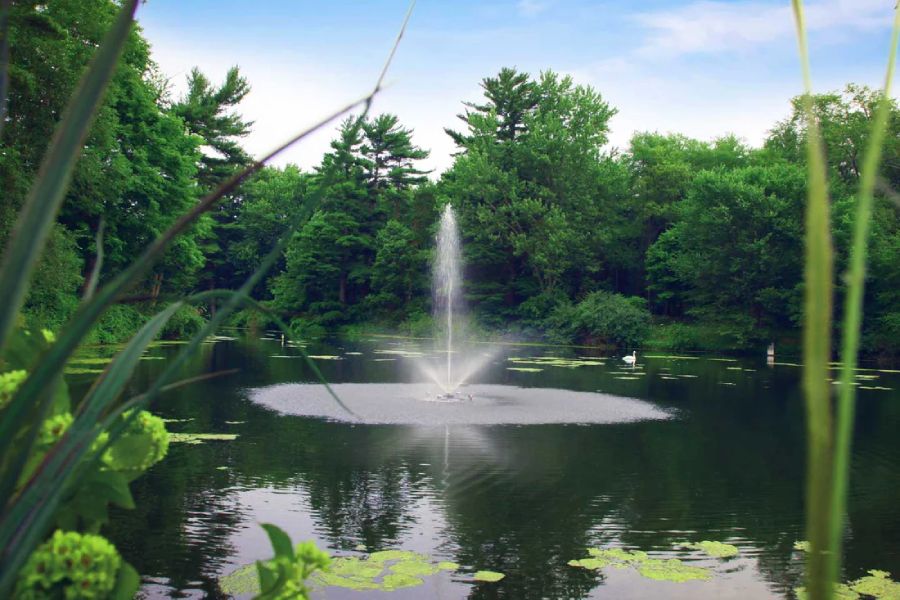
Adding a fountain transforms any pond into a beautiful focal point. Property owners often rush into the installation process without understanding the technical requirements. Poor decisions during setup create expensive problems that can persist for years altogether.
The biggest installation errors stem from improper placement and sizing. Many people position fountains too close to shorelines or in shallow areas. How to install a pond fountain correctly requires understanding water depth, electrical access, and circulation patterns. Fountains need at least four feet of water depth to function properly. Shallow placement reduces spray height and creates uneven water movement. Electrical connections must follow local codes and use ground fault circuit interrupters for safety.
When anchoring your fountain to cinder blocks at bottom of pond, do not place cinder blocks directly before the float. The cinder blocks should be placed 3 feet to the side of the float for every foot of depth. Thus, if your fountain is installed in five feet of water, cinder blocks should be placed 15 feet from either side of the float.
Equipment quality makes the difference between smooth operation and constant repairs. Scott Fountains and similar established manufacturers design systems that handle continuous operation in harsh outdoor conditions. Cheap alternatives break down within months, leaving property owners with costly replacement decisions. Professional-grade pumps feature corrosion-resistant materials and reliable motor designs. Quality fountains include proper intake screens and balanced impellers that prevent clogging and vibration issues.
Installation Planning: Foundation For Success
Location selection determines fountain performance more than any other factor. The ideal spot sits in the deepest section of the pond, away from trees that drop leaves and debris. Distance from shorelines prevents spray from hitting walkways and landscaping. Wind patterns affect spray distribution, so consider prevailing winds during different seasons.
Power supply planning requires professional electrical work in some cases, especially for 220v units. Underground conduit protects wiring from damage and meets safety requirements. Many municipalities require permits for electrical work near water features. The investment in proper electrical installation prevents dangerous situations and code violations.
Sizing And Power Requirements: Matching Equipment To Pond
Fountain sizing depends on pond surface area rather than personal preference. Small ponds need modest fountains that provide circulation without overwhelming the space. Large ponds require powerful units that move water effectively across the entire surface. Undersized fountains create dead zones where algae thrives and oxygen levels drop.
Motor horsepower calculations consider both spray height goals and circulation needs. Higher spray patterns look impressive but reduce overall water movement. Balanced fountain designs prioritize circulation while maintaining attractive spray displays. Energy efficiency matters for long-term operating costs, especially in commercial applications. For aeration purposes, the most important consideration is net flow of water. Remember, nozzles restrict flow. Nozzles with large holes in them tend to aerate more.
Common Maintenance Oversights: Preventing Expensive Problems
Regular maintenance schedules prevent most fountain failures before they become expensive repairs. Monthly inspections catch problems early when solutions cost less. Seasonal maintenance includes motor service, intake cleaning, and spray nozzle adjustments.
Water quality affects fountain lifespan more than operating hours. Hard water creates mineral buildup that clogs nozzles and damages pump components. Regular water testing identifies chemical imbalances that accelerate equipment wear. Proper water treatment extends fountain life and maintains consistent performance.
Winter preparation prevents freeze damage in cold climates. Removing fountains from water protects pumps and motors from ice expansion. Storage in heated spaces prevents moisture damage to electrical components.
Successful pond fountain installation starts with understanding common mistakes and planning solutions. Proper placement, quality equipment selection, and regular maintenance create years of reliable operation. Property owners who invest time in planning avoid the frustration and expense of premature equipment failure. Contact a qualified installer to assess your pond and recommend appropriate fountain options for lasting results.
Featured Image source: https://www.fountainmountain.com/cdn/shop/products/skyward-1-2-hp-3130-r2-feature_1100x.jpg?v=1643391197