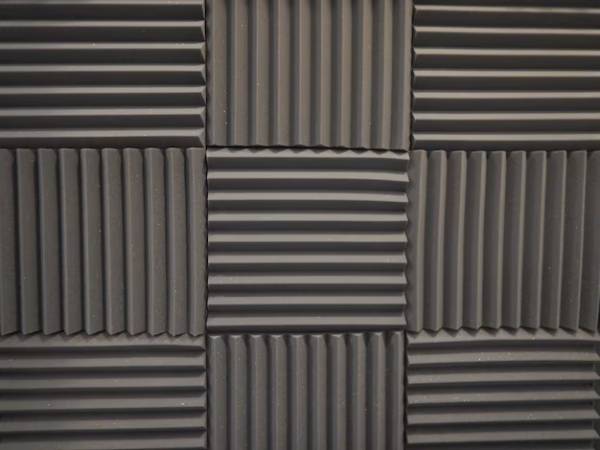
Acoustic foams are a great solution for sound proofing your home or office. They reduce reverberation and improve sound clarity.
While most of us associate acoustic foams with music studios, they can also be used in your own home. It’s an easy DIY project that can improve the acoustic quality of your home or work place.
Reduces Reverberation
When sound waves reflect off of hard surfaces in a space, they create reverberation that degrades audio quality and can make it difficult to understand what is being said. Acoustic foams absorb these waves to create a quieter environment where people can communicate clearly and focus without distraction.
Companies like Flexipol specialize in manufacturing high-quality acoustic foams designed to enhance sound insulation and reduce noise. These foams are commonly used in industries like automotive, construction, and entertainment to improve acoustics, control vibrations, and optimize sound environments. Their products are crucial for both commercial and residential noise management.
Whether in home recording studios, classrooms or office environments, acoustic foam reduces noise pollution by diminishing external sounds and internal echoes, fostering a calm work environment that enhances productivity. Acoustic treatment solutions are typically included in the design process of new commercial, industrial and residential buildings to ensure optimal acoustics. However, acoustic foam is also an affordable way to improve the sound quality in existing rooms.
The acoustic properties of foam are created by its open-pored material structure that allows air particles to move easily through it. The vibrations caused by sound waves pass through these pores and convert into heat energy that is then absorbed by the surrounding air molecules. The larger the pores, the more effective this conversion is. This process is what makes acoustic foam so effective.
Acoustic foam is available in a variety of shapes and sizes, from pyramids to egg crates, that can be mounted on walls to treat low frequencies or used as bass traps to minimize sound echoes. Some acoustic foams are designed for ease of installation, with self-adhesive backings and special mounting tabs. Others are more versatile and can be cut with an electric kitchen knife, a carpet knife or even a band saw to modify the shape for use in different areas.
Foam soundproofing is a common practice in most modern buildings, including equipment warehouses, churches and gymnasiums, schools, office environments, restaurants and homes. Some buildings are even designed with acoustic control in mind, but this isn’t always possible in older buildings. Acoustic foams are an easy-to-install, cost-effective way to soften the hard surfaces in a room and reduce reverberation.
Using acoustic foam in a room can help with noise pollution, but there are other options for acoustic control such as movable sound treatments that can be easily moved to different rooms or if you have a large budget, full acoustic treatment is available. Be careful when buying DIY acoustic products, especially if you are looking for a solution to manage low frequencies and reverberation. Cheap, thin foam squares may appear to be an inexpensive option, but they only dampen high frequencies and don’t work well for bass management or reverberation control.
Absorbs Direct and Indirect Sound
Acoustic foams have a special pore structure that receives sound waves and absorbs their energy. The vibratory energy is converted into heat and the resulting noise is stopped from reflecting back into the environment. This is how acoustic foams work to prevent noise pollution in recording studios and other environments that need high-quality sound treatment.
The type of acoustic foam that is used to improve room acoustics can be either open-cell or closed-cell, and it can vary in thickness as well. Open-cell acoustic foam is typically made from materials such as polyurethane. Closed-cell acoustic foam is usually made from materials such as fiberglass. Both types of acoustic foam are designed to reduce or eliminate distracting noises, so the material and thickness is crucial.
In addition to absorbing direct sound, acoustic foam can also absorb indirect sounds, such as those caused by reflections. These indirect sounds are often what causes spaces like gymnasiums or churches to echo when someone claps their hands. By absorbing these sounds, the quality of the clap is improved and reverberation can be reduced.
A large number of different industries use acoustic foam for a wide variety of applications. This includes the automotive industry where foam is inserted in engine compartments to reduce vibrations that can cause stress and prevent communication between technicians, and the construction industry, which uses acoustic foam to control noise levels. Foam is also a common choice for industrial noise control, where excess sound and vibration can interfere with machinery and pose safety risks.
Another popular use for acoustic foam is in audio production and sound reproduction. Youtubers, podcasters, and music producers use it to increase their production quality and to make the recordings and playback of their audio more accurate and clear. For this purpose, the foam is often cut into custom shapes and sizes to fit the dimensions of the recording space.
Many acoustic foam manufacturers offer products in a range of colours and shapes to suit different requirements. In addition to the standard flat panels, there are chamfered and convoluted options available as well as wedge-shaped foam that is ideal for reducing low frequencies. These panels can be hung on walls or ceilings and are often used to equalise and calibrate internal acoustics. They are often found in sound studios, music rooms and cinemas.
Prevents Early Reflections
A sound wave’s spectral content depends on its early reflections. In general, your ear adds up both the direct sound wave and the reflected one to produce what you hear. But the reflected soundwave loses energy after each bounce, which degrades its quality. By absorbing early reflections, acoustic foam prevents reflected waves from losing too much energy.
The best way to reduce reverberation in larger spaces is to install broadband acoustic bass traps in the corners of the room, along with absorptive acoustic foam. These are ideally made from an absorbent material with a high density such as high-performance rock wool, or from an absorbent polymer such as cellulose. They can be upholstered in acoustic breathable fabrics to match your décor and provide a sleek finish.
These acoustic solutions can be installed in the ceiling or in the walls behind the speakers. The best locations to place them are at the points where the walls meet the ceiling or floor, and where the walls meet each other at corners. These are the primary places where reverberation occurs, and by treating them you will significantly improve your listening experience in both live and recorded music.
Adding some acoustic foam to these areas will greatly reduce reverberation and make it easier to understand what is being said when people are talking in the room. This type of acoustic treatment is also commonly used in classrooms, conference rooms and offices where speech intelligibility is key. It is often a requirement in new commercial buildings, and even many domestic buildings that are built with open plan spaces will be soundproofed to prevent distracting noise from travelling between rooms.
Reduces Noise
A common misconception is that acoustic foams block out or stop sound, but this isn’t the case. They’re used to control reverberation that sounds produce rather than stop them entirely. Acoustic foams are made from soft, porous materials that trap sound waves in their microscopic openings like a sponge traps water. Once trapped, the energy from the sound waves is converted into heat and the echoes and reverberations are reduced.
In order for sound to bounce around your room, it needs to have something to hit or come against. This can lead to acoustic problems like echo and reverberation, which can negatively impact audio quality. Acoustic foams are a cost-effective, lightweight solution that helps reduce reverberation and improve the clarity of your recording space.
The most common type of acoustic foam is polyurethane, and it’s used to treat rooms of all shapes and sizes. It’s produced by combining a mixture of chemicals, including 40% polyisocyanates, 50% polyol and 10% water. This is blended together in a mixing head that triggers the foaming process to create the acoustic treatment.
Polyurethane foam is an open-cell material that’s able to absorb sound waves and diffuse them, which can help eliminate unwanted reverberation. It’s also flexible and can be shaped to fit your space. Acoustic foam is also easy to mount on your wall using various methods. It’s important to understand the layout of your room before mounting your acoustic treatment to make sure you have the right type and amount of foam.
If you’re looking for a more permanent option, you can purchase acoustic bass traps. These are acoustic treatments that can be mounted on your walls to improve the acoustics of your studio. They’re designed to be placed at your studio’s primary reflection points, which are areas that tend to have the most echoes and reverberation.
These treatments are easy to install and can be done by yourself with some basic DIY skills. They can be shaped into different designs like egg cartons or wedges to reduce reflections and diffusing sound throughout the room. They don’t however’sound proof’ the room as they are not airtight and can still transmit sound through any gaps that remain or any holes in the walls. They can however be combined with other acoustic treatments to provide more effective results.
Featured Image Source: https://img.freepik.com/free-photo/acoustic-foam-studio_1381-12.jpg?ga=GA1.1.1958113347.1732533911&semt=ais_hybrid